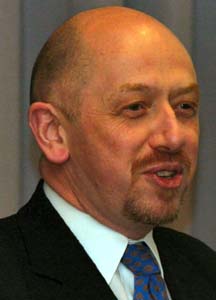
[the hill] Federal Communications Commission Chairman Julius Genachowski announced a five-step plan to deploy the next generation of 911 services at a conference in Philadelphia on Wednesday.
The plan will allow emergency responders to receive text messages, voice calls, videos and photos from individuals while providing automatic location information to decrease response time. The commission is expected to launch a rulemaking on the issue at next month's open meeting.
“It’s hard to imagine that airlines can send text messages if your flight is delayed, but you can’t send a text message to 9-1-1 in an emergency," Genachowski said.
"The unfortunate truth is that the capability of our emergency response communications has not kept pace with commercial innovation — has not kept pace with what ordinary people now do every day with communications devices. The shift to NG911 can’t be about if, but about when and how.”
Genachowski promised last year that the next generation of 911 services would include the ability to accept text messages and videos, citing the inability of trapped students to text 911 during the Virginia Tech campus shootings in 2007. The FCC launched an inquiry on texting 911 at its December meeting.
The plan calls for developing location accuracy mechanisms so emergency dispatchers can quickly pinpoint the location of the caller. The commission will also work with states to create a governance framework for the next-generation 911 network, along with technical standards for hardware and software.
The commission will also work with Congress to develop a cost model and explore possible options to fund the next-generation network.
Congress is still deadlocked over the issue of a nationwide, interoperable public-safety network for first-responders, one of the key recommendations of the 9/11 Commission. The stalemate appears unlikely to be resolved before the 10th anniversary of the attacks next month.
FCC announces plan to update 911 to receive texts, video
Thursday, August 11, 2011
Tuesday, August 09, 2011
Australia - The decline of the Wi-Fi hotspot driven by the cheapness of mobile broadband - but rise again as operators try to off-load traffic
[it wire] Remember when carrier operated public WiFi hotspots were all the rage? Telstra, Optus and a handful of private operators were rolling them out in coffee shops, airports and on the street. Sure every other coffee shop today has free WiFi, but the big telco-operated networks have all but disappeared. They could be about to make a comeback.
Telstra at one point had over 1000 public WiFi hotspots. In mid 2005 it had 130 in the CBDs of Sydney and Melbourne alone. The Australian reported at the time that Telstra had "switched on blanket WiFi coverage across the Sydney and Melbourne CBDs."
And where are they today? According to Telstra's web site it has just 49. They are located mostly in airports and a few hotels and conference centres.
Optus' network has similarly shrunk. It announced in 2003 that it would install over 500 WiFi hotspots in CBD cafes, airports and hotels over the ensuing 18 months. I'm not sure what the number peaked at but today, according to the Optus web site there are less than 60 in a disparate collection of - mostly - coffee shops hotels and bars. And, the web site says, the service is not available to new customers.
It's not hard to see why telco-operated public WiFi is moribund: the meteoric rise of - and similarly meteoric fall in the price of - wireless broadband. Public WiFi is not even a cheap option: Both Telstra and Optus charge around $12 per hour, which is not particularly attractive in comparison to cellular broadband except for the very infrequent user. Once you've bought your dongle - pretty cheap these days - even the premium priced Telstra will give you 1GB on its mobile network anywhere in Australia for $40 on 30 day prepay. And the MVNOs are a good deal cheaper.
But perhaps it is too early to write RIP over carrier operated WiFi networks. A number of industry commentators claim that, notwithstanding the efficiency gains promised by LTE and beyond it by LTE advanced, such is the growing demand for wireless data that offload to WiFi and/or femtocells will be essential.
Just last week, analyst firm Juniper Research issued a report forecasting that even with the increased deployment and utilisation of LTE networks, global mobile network data delivery costs could surpass $US370b annually by 2016, a sevenfold increase on their 2010 level of $US53b.
Where has all the WiFi gone?
Telstra at one point had over 1000 public WiFi hotspots. In mid 2005 it had 130 in the CBDs of Sydney and Melbourne alone. The Australian reported at the time that Telstra had "switched on blanket WiFi coverage across the Sydney and Melbourne CBDs."
And where are they today? According to Telstra's web site it has just 49. They are located mostly in airports and a few hotels and conference centres.
Optus' network has similarly shrunk. It announced in 2003 that it would install over 500 WiFi hotspots in CBD cafes, airports and hotels over the ensuing 18 months. I'm not sure what the number peaked at but today, according to the Optus web site there are less than 60 in a disparate collection of - mostly - coffee shops hotels and bars. And, the web site says, the service is not available to new customers.
It's not hard to see why telco-operated public WiFi is moribund: the meteoric rise of - and similarly meteoric fall in the price of - wireless broadband. Public WiFi is not even a cheap option: Both Telstra and Optus charge around $12 per hour, which is not particularly attractive in comparison to cellular broadband except for the very infrequent user. Once you've bought your dongle - pretty cheap these days - even the premium priced Telstra will give you 1GB on its mobile network anywhere in Australia for $40 on 30 day prepay. And the MVNOs are a good deal cheaper.
But perhaps it is too early to write RIP over carrier operated WiFi networks. A number of industry commentators claim that, notwithstanding the efficiency gains promised by LTE and beyond it by LTE advanced, such is the growing demand for wireless data that offload to WiFi and/or femtocells will be essential.
Just last week, analyst firm Juniper Research issued a report forecasting that even with the increased deployment and utilisation of LTE networks, global mobile network data delivery costs could surpass $US370b annually by 2016, a sevenfold increase on their 2010 level of $US53b.
Where has all the WiFi gone?
Netherlands - Net Neutrality Law has been blamed for rises in mobile data prices, considered among the most expensive in Europe
[fierce wireless] All three mobile operators in the Netherlands have now raised their mobile data pricing, making the tariffs among the most expensive in Europe.
The pricing changes, first taken by KPN Mobile, are being viewed as the operator community's response to the Dutch parliament passing net neutrality legislation, which has banned operators from charging extra for services like Skype and IM services.
The Dutch market, which is becoming increasingly competitive, saw KPN Mobile, which has just under 50 per cent market share--report second-quarter service revenues down 8.7 per cent year-on-year. The company responded by announcing mobile data price increases starting September 15.
T-Mobile, which shares the remaining market with Vodafone, has followed KPN Mobile by no longer offering unlimited data at no extra cost. Instead, subscribers can pay extra to go above the limit but only at a slower data speed. Vodafone also lowered its data allowances in new tariff plans that became effective last Monday.
In an attempt to soften the impact of these changes, KPN and Vodafone are looking to make their subscribers more aware of their data usage. Both operators plan to provide customers with more data download details on their monthly bills as well as up-to-date usage via the operators' websites.
Vodafone, T-Mobile react to Dutch net neutrality by raising mobile data tariffs
The pricing changes, first taken by KPN Mobile, are being viewed as the operator community's response to the Dutch parliament passing net neutrality legislation, which has banned operators from charging extra for services like Skype and IM services.
The Dutch market, which is becoming increasingly competitive, saw KPN Mobile, which has just under 50 per cent market share--report second-quarter service revenues down 8.7 per cent year-on-year. The company responded by announcing mobile data price increases starting September 15.
T-Mobile, which shares the remaining market with Vodafone, has followed KPN Mobile by no longer offering unlimited data at no extra cost. Instead, subscribers can pay extra to go above the limit but only at a slower data speed. Vodafone also lowered its data allowances in new tariff plans that became effective last Monday.
In an attempt to soften the impact of these changes, KPN and Vodafone are looking to make their subscribers more aware of their data usage. Both operators plan to provide customers with more data download details on their monthly bills as well as up-to-date usage via the operators' websites.
Vodafone, T-Mobile react to Dutch net neutrality by raising mobile data tariffs
Cyberwarfare - Proposal to use OSCE as the vehicle to pre-empt cyberattacks
[nextgov] Russia and the United States are co-sponsoring a resolution to pre-empt cyberattacks that an influential international body is expected to adopt this week, according to a Belgium parliamentary member who introduced the decree. The proposal calls for member nations to exchange information about the way they intend to deploy cyber technology during military conflicts.
Russian support is notable because the former Soviet republic was blamed in 2007 for knocking out Internet access in neighboring Estonia. Both nations belong to the 56-member Organization for Security and Cooperation in Europe. OSCE parliamentarians are gathering this week in Serbia to select provisions for inclusion in the Belgrade Declaration, an annual statement that guides OSCE decisions. The organization, which represents North America, Europe and Central Asia, provides a venue for negotiations on conflict prevention and post-war rehabilitation.
"One advantage of OSCE is that we have Russia as a state," Belgian Parliamentarian Francois Xavier de Donnea told Nextgov in an interview Tuesday. "It is a place where the American and European countries can dialogue with the former Soviet Union and risks can be reduced."
Alexander Kozlovsky, deputy chairman of the Russian State Duma International Affairs Committee, signed the proposed provision, according to de Donnea.
"I think such a resolution could get unanimous support," de Donnea said.
Last month, defense ministers at NATO, which does not include Russia, approved a new policy on cyber defense to help allies protect their communications systems and deter cyberattacks.
Deputy Secretary of Defense William J. Lynn III said shortly after passage, "NATO is unanimous in acknowledging the need to elevate its treatment of network security," adding that the new strategic concept the alliance adopted last November "names cybersecurity as a leading priority for NATO in the 21st century."
But De Donnea said the ideal forum for worldwide discussion of cybersecurity threats is the United Nations.
"If the OSCE succeeds in conducting dialogues between states on norms in cybersecurity. . . it would be a major step toward a more global approach, which would be promoted by the United Nations," he said. The U.N. and OSCE do not share a budget but coordinate closely on field operations.
Last week, Homeland Security Secretary Janet Napolitano said she believes the OSCE can play a meaningful role in forming international measures for state behavior in cyberspace, but she was not specifically addressing the resolution at the time, aides said Tuesday.
"We welcome consideration of the establishment of a cybersecurity unit within the OSCE secretariat with existing resources and look forward to discussing this in more detail with other OSCE participating states and partners," she said during remarks at a joint meeting of the OSCE Permanent Council and OSCE Forum for Security Cooperation in Vienna.
Separately, the White House in May distributed a voluntary international strategy for cybersecurity that, like the OSCE proposal, urges cooperation in developing standards for acceptable conduct on the Internet.
U.S. and Russia among 22 nations supporting international cyber resolution
Russian support is notable because the former Soviet republic was blamed in 2007 for knocking out Internet access in neighboring Estonia. Both nations belong to the 56-member Organization for Security and Cooperation in Europe. OSCE parliamentarians are gathering this week in Serbia to select provisions for inclusion in the Belgrade Declaration, an annual statement that guides OSCE decisions. The organization, which represents North America, Europe and Central Asia, provides a venue for negotiations on conflict prevention and post-war rehabilitation.
"One advantage of OSCE is that we have Russia as a state," Belgian Parliamentarian Francois Xavier de Donnea told Nextgov in an interview Tuesday. "It is a place where the American and European countries can dialogue with the former Soviet Union and risks can be reduced."
Alexander Kozlovsky, deputy chairman of the Russian State Duma International Affairs Committee, signed the proposed provision, according to de Donnea.
"I think such a resolution could get unanimous support," de Donnea said.
Last month, defense ministers at NATO, which does not include Russia, approved a new policy on cyber defense to help allies protect their communications systems and deter cyberattacks.
Deputy Secretary of Defense William J. Lynn III said shortly after passage, "NATO is unanimous in acknowledging the need to elevate its treatment of network security," adding that the new strategic concept the alliance adopted last November "names cybersecurity as a leading priority for NATO in the 21st century."
But De Donnea said the ideal forum for worldwide discussion of cybersecurity threats is the United Nations.
"If the OSCE succeeds in conducting dialogues between states on norms in cybersecurity. . . it would be a major step toward a more global approach, which would be promoted by the United Nations," he said. The U.N. and OSCE do not share a budget but coordinate closely on field operations.
Last week, Homeland Security Secretary Janet Napolitano said she believes the OSCE can play a meaningful role in forming international measures for state behavior in cyberspace, but she was not specifically addressing the resolution at the time, aides said Tuesday.
"We welcome consideration of the establishment of a cybersecurity unit within the OSCE secretariat with existing resources and look forward to discussing this in more detail with other OSCE participating states and partners," she said during remarks at a joint meeting of the OSCE Permanent Council and OSCE Forum for Security Cooperation in Vienna.
Separately, the White House in May distributed a voluntary international strategy for cybersecurity that, like the OSCE proposal, urges cooperation in developing standards for acceptable conduct on the Internet.
U.S. and Russia among 22 nations supporting international cyber resolution
USA - FCC has found that fdixed broadband speeds are close to promised levels
[computer world] Wired broadband providers in the U.S. deliver speeds that are close to, and sometimes exceed, the service they promise customers, according to a report released Tuesday by the U.S. Federal Communications Commission.
During peak hours, providers of DSL-based service delivered download speeds that were 82% of advertised speeds, while cable providers delivered 93% of advertised speeds, and fiber-based providers delivered 114% of advertised speeds, said the FCC report, based on test results from 6,800 U.S. residents.
Upload speeds during peak hours were 95% of the advertised speeds for DSL, 108% for cable and 112% for fiber.
The tests, of 13 broadband providers serving 86% of the U.S. population, are "the most comprehensive and rigorous assessment ever of broadband performance in the United States," FCC Chairman Julius Genachowski said during a press conference at a Best Buy in Washington, D.C.
The new report represents a "significant improvement" over 2009 tests released in August 2010, Genachowski said. The earlier FCC report said U.S. consumers were getting download speeds that were half of the advertised speeds.
Some critics questioned the results and methodology the FCC used in the earlier study. The new report "corrects" the earlier study and shows the FCC's commitment to use good data, said Richard Bennett, senior research fellow at the Information Technology and Innovation Foundation, a tech-focused think tank.
"This report pretty well dispels the myth that many of my colleagues in the public-interest community have been peddling for a while that there's a huge gap between advertised and actual speeds," he said.
Genachowski and Parul Desai, communications policy counsel at Consumers Union, called on broadband providers to give customers more easy-to-understand information about broadband speeds provided. About 49% of the broadband customers who volunteered for the FCC study could not correctly report the advertised broadband speed their service offered, the report said.
"Consumers have been wandering in the wilderness for a long time, and we hope this information will help people cut through the confusion," Desai said. "Broadband is becoming so essential for Americans in their daily lives."
The FCC should also release a similar report on mobile broadband speeds, Desai said.
AT&T and the National Cable and Telecommunications Association, a trade group representing cable broadband providers, applauded the report.
"These results, based on data from monitoring equipment installed in consumer homes and in ISP networks, debunk the conventional mythology that ISPs are delivering far less than the speeds they advertise," Bob Quinn, AT&T's senior vice president for federal regulatory affairs, wrote in a blog post. "Perhaps now we can get past the rhetoric about advertised vs. actual speeds and focus on the important task of ensuring all Americans have access to these broadband services."
FCC: Broadband delivers close to advertised speeds
During peak hours, providers of DSL-based service delivered download speeds that were 82% of advertised speeds, while cable providers delivered 93% of advertised speeds, and fiber-based providers delivered 114% of advertised speeds, said the FCC report, based on test results from 6,800 U.S. residents.
Upload speeds during peak hours were 95% of the advertised speeds for DSL, 108% for cable and 112% for fiber.
The tests, of 13 broadband providers serving 86% of the U.S. population, are "the most comprehensive and rigorous assessment ever of broadband performance in the United States," FCC Chairman Julius Genachowski said during a press conference at a Best Buy in Washington, D.C.
The new report represents a "significant improvement" over 2009 tests released in August 2010, Genachowski said. The earlier FCC report said U.S. consumers were getting download speeds that were half of the advertised speeds.
Some critics questioned the results and methodology the FCC used in the earlier study. The new report "corrects" the earlier study and shows the FCC's commitment to use good data, said Richard Bennett, senior research fellow at the Information Technology and Innovation Foundation, a tech-focused think tank.
"This report pretty well dispels the myth that many of my colleagues in the public-interest community have been peddling for a while that there's a huge gap between advertised and actual speeds," he said.
Genachowski and Parul Desai, communications policy counsel at Consumers Union, called on broadband providers to give customers more easy-to-understand information about broadband speeds provided. About 49% of the broadband customers who volunteered for the FCC study could not correctly report the advertised broadband speed their service offered, the report said.
"Consumers have been wandering in the wilderness for a long time, and we hope this information will help people cut through the confusion," Desai said. "Broadband is becoming so essential for Americans in their daily lives."
The FCC should also release a similar report on mobile broadband speeds, Desai said.
AT&T and the National Cable and Telecommunications Association, a trade group representing cable broadband providers, applauded the report.
"These results, based on data from monitoring equipment installed in consumer homes and in ISP networks, debunk the conventional mythology that ISPs are delivering far less than the speeds they advertise," Bob Quinn, AT&T's senior vice president for federal regulatory affairs, wrote in a blog post. "Perhaps now we can get past the rhetoric about advertised vs. actual speeds and focus on the important task of ensuring all Americans have access to these broadband services."
FCC: Broadband delivers close to advertised speeds
Monday, August 08, 2011
Switzerland - With France Telecom proposing to sell its network, bidders are emerging, including a cable operator
[cellular news] Only a few weeks after France Telecom said that it was going to have another attempt at selling its Switzerland subsidiary, it is reported that at least three companies are interested in bidding for the company.
Citing three people familiar with the matter, Bloomberg News reported that Apax Partners, Eqt Partners and cable operator Liberty Global are all considering a bid for Orange Switzerland.
The sale process probably will begin at the end of this month, said two of the people, who declined to be identified as talks are private.
The company tried to merge Orange Switzerland with rival network, Sunrise last year, but it was blocked by the Swiss Competition Commission.
Suitors Lining Up for Orange Switzerland Sale
Citing three people familiar with the matter, Bloomberg News reported that Apax Partners, Eqt Partners and cable operator Liberty Global are all considering a bid for Orange Switzerland.
The sale process probably will begin at the end of this month, said two of the people, who declined to be identified as talks are private.
The company tried to merge Orange Switzerland with rival network, Sunrise last year, but it was blocked by the Swiss Competition Commission.
Suitors Lining Up for Orange Switzerland Sale
LTE - Ovum reports that tariffs are not innovative discouraging use of mobile broadband
[cellular news] Operators that offer high-speed mobile broadband technology LTE are failing to deliver innovative pricing models, according to Ovum.
In a new report, the telecoms analyst firm claims that there is a lack of new and innovative LTE tariffs, which is a missed opportunity for operators given that LTE is a new service in the eyes of consumers.
Nicole McCormick, Ovum senior analyst and author of the report, commented: "We looked at the LTE pricing strategies of operators in Europe, Asia-Pacific, and theUS, and were disappointed with our findings.
"LTE provides operators with the opportunity to experiment with new and innovative pricing models, which allows them to find the best way of deriving revenues from the premium service.
"However, most operators have not grasped this opportunity. Instead, LTE tariffs in the regions Ovum analysed are dominated by unlimited offerings and large data buckets, which can be problematic."
According to the report, unlimited data plans for LTE can present significant problems for operators, especially if they are accompanied by a lenient fair usage policy.
McCormick commented: "Operators should not offer unlimited LTE tariffs without some sort of deterrent as they could have an impact on the quality of the service given LTE's data-intensive nature. However, we note that some leading operators -Verizon Wireless,SKTelecom, NTT DoCoMo and LG U+ - have steered clear of unlimited LTE offerings despite offering such packages in the 3G arena."
The report also found that charging high premiums for LTE is unsustainable in the long-term due to competitive pressures in the industry and increased migration to 4G services. McCormick added: "Operators will need to be careful not to alienate high-end customers that have paid a premium for a fast, high-quality service by reducing LTE tariffs too quickly or drastically."
Lack of Innovation in LTE Pricing Models, Report Finds
In a new report, the telecoms analyst firm claims that there is a lack of new and innovative LTE tariffs, which is a missed opportunity for operators given that LTE is a new service in the eyes of consumers.
Nicole McCormick, Ovum senior analyst and author of the report, commented: "We looked at the LTE pricing strategies of operators in Europe, Asia-Pacific, and theUS, and were disappointed with our findings.
"LTE provides operators with the opportunity to experiment with new and innovative pricing models, which allows them to find the best way of deriving revenues from the premium service.
"However, most operators have not grasped this opportunity. Instead, LTE tariffs in the regions Ovum analysed are dominated by unlimited offerings and large data buckets, which can be problematic."
According to the report, unlimited data plans for LTE can present significant problems for operators, especially if they are accompanied by a lenient fair usage policy.
McCormick commented: "Operators should not offer unlimited LTE tariffs without some sort of deterrent as they could have an impact on the quality of the service given LTE's data-intensive nature. However, we note that some leading operators -Verizon Wireless,SKTelecom, NTT DoCoMo and LG U+ - have steered clear of unlimited LTE offerings despite offering such packages in the 3G arena."
The report also found that charging high premiums for LTE is unsustainable in the long-term due to competitive pressures in the industry and increased migration to 4G services. McCormick added: "Operators will need to be careful not to alienate high-end customers that have paid a premium for a fast, high-quality service by reducing LTE tariffs too quickly or drastically."
Lack of Innovation in LTE Pricing Models, Report Finds
Asia and Africa - UNDP project to give the poor with virtual phone numbers to be accessible from shared phones
[cellular news] Three million poor people in Africa and South Asia, the majority of them women, will gain access to low-cost mobile phone numbers as part of technology firm Movirtu's partnership with the United Nations-backed initiative that enlists the private sector in efforts to fight poverty.
Instead of sharing a phone number with family members or neighbours, those provided with a Movirtu cloud phone number will be able to use any mobile phone to log in with their own unique number to make and receive individual calls and access critical information and services such as banking or agriculture support.
The new effort is part of the Business Call to Action (BCtA), a global initiative supported by the UN Development Programme (UNDP), the corporate responsibility scheme known as the UN Global Compact and several other organizations and governments.
"Evidence shows that access to mobile communications is a way of improving lives and expanding the earning potential of one billion people living on $1-2 a day," said Amanda Gardiner, BCtA Acting Programme Manager.
"By providing low-income communities with access to secure mobile accounts and identities, Movirtu is helping to bridge the divide between those that have easy access to mobile phones and those that rely on community phones or paying a borrower's premium to friends to meet their communication needs," she added.
The United Kingdom-based company plans to bring the phone technology to at least 12 markets in Africa and South Asia by early 2013, giving at least 50 million people in both continents access to the technology, with a target of 3 million using it on a regular basis.
A unique personal mobile identity will allow users to access network applications that provide information about employment opportunities, promote access to mobile payment systems or banking services, and help keep users up-to-date on a variety of health and market topics.
The main beneficiaries of Movirtu's investment will be women in rural communities in South Asia and sub-Saharan Africa, according to a news release issued by the company and BCtA.
"It is a basic fact not everyone in the world can afford their own mobile phone," said Ramona Liberoff, Executive Vice President of Marketing, Strategy and Planning at Movirtu. "Our goal is to increase the earning potential of those on $1-2 a day by saving money and allowing them to access the economic benefits of a full mobile identity today."
Movirtu has been piloting the phones in Africa, with Madagascar the first market entry point. Additional country launches will be announced later this year.
Millions of Poor People Will Have Mobile Phone Numbers Under UN-backed Scheme
Instead of sharing a phone number with family members or neighbours, those provided with a Movirtu cloud phone number will be able to use any mobile phone to log in with their own unique number to make and receive individual calls and access critical information and services such as banking or agriculture support.
The new effort is part of the Business Call to Action (BCtA), a global initiative supported by the UN Development Programme (UNDP), the corporate responsibility scheme known as the UN Global Compact and several other organizations and governments.
"Evidence shows that access to mobile communications is a way of improving lives and expanding the earning potential of one billion people living on $1-2 a day," said Amanda Gardiner, BCtA Acting Programme Manager.
"By providing low-income communities with access to secure mobile accounts and identities, Movirtu is helping to bridge the divide between those that have easy access to mobile phones and those that rely on community phones or paying a borrower's premium to friends to meet their communication needs," she added.
The United Kingdom-based company plans to bring the phone technology to at least 12 markets in Africa and South Asia by early 2013, giving at least 50 million people in both continents access to the technology, with a target of 3 million using it on a regular basis.
A unique personal mobile identity will allow users to access network applications that provide information about employment opportunities, promote access to mobile payment systems or banking services, and help keep users up-to-date on a variety of health and market topics.
The main beneficiaries of Movirtu's investment will be women in rural communities in South Asia and sub-Saharan Africa, according to a news release issued by the company and BCtA.
"It is a basic fact not everyone in the world can afford their own mobile phone," said Ramona Liberoff, Executive Vice President of Marketing, Strategy and Planning at Movirtu. "Our goal is to increase the earning potential of those on $1-2 a day by saving money and allowing them to access the economic benefits of a full mobile identity today."
Movirtu has been piloting the phones in Africa, with Madagascar the first market entry point. Additional country launches will be announced later this year.
Millions of Poor People Will Have Mobile Phone Numbers Under UN-backed Scheme
Ireland - Just Mobile, an MVNO, is closing down due to the lack of funding, following losses of EUR 2 million
[cellular news] Irish MVNO, Just Mobile says that it is closing its network after being unable to secure additional funding to continue operations.
The company operated on the Vodafone network and said that the network, and other suppliers - which it said had have been very supportive - could not continue to support the company any longer.
In a statement, the company said that it had "created something special for our customers, but unfortunately the business climate is not conducive for young companies to raise capital in."
The shut-down will take place progressively over the next couple of weeks and will close completely on the 19th August.
The company is reported to have lost around EUR2 million since it was launched just ten months ago.
Irish MVNO Closes Down
The company operated on the Vodafone network and said that the network, and other suppliers - which it said had have been very supportive - could not continue to support the company any longer.
In a statement, the company said that it had "created something special for our customers, but unfortunately the business climate is not conducive for young companies to raise capital in."
The shut-down will take place progressively over the next couple of weeks and will close completely on the 19th August.
The company is reported to have lost around EUR2 million since it was launched just ten months ago.
Irish MVNO Closes Down
UK - Appeal by BT was upheld allowing higher charges for calls to certain number ranges
[catribunal] BRITISH TELECOMMUNICATIONS PLC - and - EVERYTHING EVERYWHERE LIMITED (Appellants) - v - OFFICE OF COMMUNICATIONS (Respondent)
These relate to:
OFCOM’s determinations
on 5 February 2010 for calls terminating on 080
on 10 August 2010 for calls terminating on 0845 and 0870
judgement
These relate to:
OFCOM’s determinations
on 5 February 2010 for calls terminating on 080
on 10 August 2010 for calls terminating on 0845 and 0870
judgement
Sunday, August 07, 2011
Guyana - Govt has been working to develop an open telecoms sector to advance social and economic development
[NCN Guyana] The Government has been working assiduously to develop an open telecommunications sector, to lend to the social and economic advancement of the country.
This is according to Prime Minister, Samuel Hinds, who was speaking at the presentation of the new telecommunications legal regime at the International Conference Centre earlier today.
He noted that the telecommunications sector has been rapidly evolving, hence the need for a new legal framework to enable Guyana to perform effectively in a competitive environment.
He believes hybrid solutions are necessary to improve telecommunications, given Guyana's population.
The new telecommunications legal regime will see the development of the new telecommunications act and amendments to the public utilities commission act, as well as regulations for licensing, interconnection and pricing.
New licenses and frequency authorization will also be issued under this new legislation to Gt&T, Digicel and four existing internet service providers.
Under the new institutional arrangement for the sector, the minister responsible will be tasked with developing policies, determining what types of networks and services require licenses and oversee the new telecommunications agency that will be established.
Government is working to open the telecommunication sector
This is according to Prime Minister, Samuel Hinds, who was speaking at the presentation of the new telecommunications legal regime at the International Conference Centre earlier today.
He noted that the telecommunications sector has been rapidly evolving, hence the need for a new legal framework to enable Guyana to perform effectively in a competitive environment.
He believes hybrid solutions are necessary to improve telecommunications, given Guyana's population.
The new telecommunications legal regime will see the development of the new telecommunications act and amendments to the public utilities commission act, as well as regulations for licensing, interconnection and pricing.
New licenses and frequency authorization will also be issued under this new legislation to Gt&T, Digicel and four existing internet service providers.
Under the new institutional arrangement for the sector, the minister responsible will be tasked with developing policies, determining what types of networks and services require licenses and oversee the new telecommunications agency that will be established.
Government is working to open the telecommunication sector
UK - Scotland has a markedly lower proportion of broadband lines than the rest of the UK
[bbc] Scots are still the least likely in the UK to have a broadband internet connection, according to a report from the communications regulator Ofcom.
Just 61% of Scots have broadband, compared with 74% of people across the whole of the UK.
Broadband connection is particularly low in Greater Glasgow, where the figure is just 50%.
One reason why take-up is so low may be that a relatively high proportion of Scots never use the internet.
Ofcom's Scottish director Vicki Nash warned that with so many public services now available online, Scots were at risk of being left behind.
About 30% of adults in Scotland say they do not use the internet in any location, compared with 20% across the UK as a whole.
Just under two-thirds of Scots have a computer in their home but across the UK the figure is 77%.
Take-up of broadband was particularly low amongst those aged between 16 and 34, people aged 55 and people on a low income or lower down the social scale.
Broadband use 'lower in Scotland', according to OFCOM
Just 61% of Scots have broadband, compared with 74% of people across the whole of the UK.
Broadband connection is particularly low in Greater Glasgow, where the figure is just 50%.
One reason why take-up is so low may be that a relatively high proportion of Scots never use the internet.
Ofcom's Scottish director Vicki Nash warned that with so many public services now available online, Scots were at risk of being left behind.
About 30% of adults in Scotland say they do not use the internet in any location, compared with 20% across the UK as a whole.
Just under two-thirds of Scots have a computer in their home but across the UK the figure is 77%.
Take-up of broadband was particularly low amongst those aged between 16 and 34, people aged 55 and people on a low income or lower down the social scale.
Broadband use 'lower in Scotland', according to OFCOM
Mobile - AT&T has increased voicemail security in the light of #hackgate requiring a PIN when logging in from your own phone
[boston globe] AT&T Inc. is changing the default method by which cellular customers check their voice mail, after reports that the company’s policies made messages more vulnerable to hackers than on other cellphone carriers.
The giant telecommunications company said yesterday it will start requiring users to enter a password to access their voice mails from their own cellphones. Until now, AT&T users calling from their own phones would immediately get access to their voice mails without entering a password.
“We wish that we did not have to make this change,’’ wrote AT&T’s chief privacy officer Bob Quinn in a posting on the company’s public policy blog. But Quinn said that easily available Internet technology makes it easy for criminals to gain access to unprotected cellular voice mailboxes.
AT&T increases voice mail security
Password meant to deter hackers
The giant telecommunications company said yesterday it will start requiring users to enter a password to access their voice mails from their own cellphones. Until now, AT&T users calling from their own phones would immediately get access to their voice mails without entering a password.
“We wish that we did not have to make this change,’’ wrote AT&T’s chief privacy officer Bob Quinn in a posting on the company’s public policy blog. But Quinn said that easily available Internet technology makes it easy for criminals to gain access to unprotected cellular voice mailboxes.
AT&T increases voice mail security
Password meant to deter hackers
Africa - Use of the SMS for reminders to healthcare workers is helping treat malaria sufferers
[cellular news] New research funded by the Wellcome Trust has shown that sending text message reminders to healthcare workers in rural Africa can improve the implementation of national guidelines for treating malaria. The intervention led to more patients receiving accurate antimalarial treatment.
The study, published today in The Lancet, was carried out by researchers at the Kenya Medical Research Institute (KEMRI)-Wellcome Trust Research Programme in Nairobi.
Within Africa, the adherence to national malaria treatment guidelines by health workers is vital in making sure that patients stick to and correctly complete malaria treatment doses. Failure to do so can not only affect the patient's recovery from the disease, but can also increase the likelihood of the malaria parasites becoming resistant to the drugs. However, despite the relatively simple guidelines, failure by the health workers to adhere to the guidelines has been widely reported across the continent.
To help improve health workers' practices, researchers at the KEMRI-Wellcome Trust Research Programme carried out a randomised controlled trial looking at the impact of sending SMS text message reminders to health workers' personal mobile phones.
For five working days, two text messages (one at 9am and one at 2pm) were sent daily to every health worker's mobile phone. The same process was repeated every week for six months. The messages included both information from the guidelines and inspirational quotes. For example:
Message one (Monday morning): Check ALL sick children <5yrs for any severe signs! Also check for fever, cough, diarrhea, pallor & any other problem. Quote: "Persistent work triumphs"
Message two (Monday afternoon): Child has FEVER when complained by mother or child is hot or Temp is >=37•5 - Pls ask mother, touch child & take Temp! Quote: "Actions speak louder than words"
Message three (Tuesday morning): TREAT with AL* all children under 5yrs weighing >=5kg coming with FEVER for first visit & without severe signs. Quote: "Opportunity seldom knocks twice"
*Artemether-lumefantrine, the recommended anti-malarial.
Most randomised controlled trials from high-income countries have focused on reminders to improve patients' adherence to treatment, and all studies assessed only short-term effects of the intervention. This is believed to be the first study to assess the use of text messaging to target the behaviour of health workers. The researchers evaluated the effectiveness of the intervention using a performance index on how health workers managed the children in clinic, by interviewing mothers of children as they left the clinic and by reviewing clinical records. The study showed a 25% improvement in health workers practices in providing correct care to patients with malaria. The intervention resulted in a substantial increase in the number of patients who received prompt antimalarial treatment at the health facility and were correctly counselled to take remaining tablets when they were at home.
Lead author of the study Dr Dejan Zurovac says: "This trial, the first one using text-messaging to target health workers' behaviour in developing countries, has shown that a simple intervention like SMS can improve health workers adherence to malaria treatment guidelines by 25%. Text-messaging should complement traditional approaches to support clinical management such as in-service training of health workers, supportive supervision, or dissemination of job-aids."
Dr Zurovac and colleagues believe the scheme may have been successful because text-message reminders address health workers' forgetfulness, emphasise the clinical importance of doing tasks described in the messages, and increase the priority of doing the tasks because the text messages represent the voice of authority of the health workers' employer (the Ministry of Health).
The simplicity and low cost of text messaging means that widespread implementation of an intervention that uses this technology can be done quickly and successfully. For example, the cost of a text message in Kenya is about US$0.01, resulting in the cost of full exposure to the intervention of $2.6 per health worker, or $39,000 if scaled up to an estimated 15,000 health workers in all rural facilities nationwide.
Professor Bob Snow, who heads the research group in Nairobi, says: "The role of the mobile phone in improving health providers' performance, health service management and patient adherence to new medicines across much of Africa has a huge potential to engage and promote health to many people, who despite being poor and often inaccessible nevertheless have access to cell phone communication."
Co-author and head of the Department of Disease Prevention and Control, Ministry of Public Health and Sanitation, Dr Willis Akhwale added: "This is an excellent example of high quality research responding to immediate needs of policy implementers who are continuously searching for simple and low cost solutions to strengthen weak health systems and provide better care for Kenyans. We need to explore ways of scaling up such intervention to all health workers in the country."
Text Message Reminders Improve Healthcare Practice in Rural Africa
The study, published today in The Lancet, was carried out by researchers at the Kenya Medical Research Institute (KEMRI)-Wellcome Trust Research Programme in Nairobi.
Within Africa, the adherence to national malaria treatment guidelines by health workers is vital in making sure that patients stick to and correctly complete malaria treatment doses. Failure to do so can not only affect the patient's recovery from the disease, but can also increase the likelihood of the malaria parasites becoming resistant to the drugs. However, despite the relatively simple guidelines, failure by the health workers to adhere to the guidelines has been widely reported across the continent.
To help improve health workers' practices, researchers at the KEMRI-Wellcome Trust Research Programme carried out a randomised controlled trial looking at the impact of sending SMS text message reminders to health workers' personal mobile phones.
For five working days, two text messages (one at 9am and one at 2pm) were sent daily to every health worker's mobile phone. The same process was repeated every week for six months. The messages included both information from the guidelines and inspirational quotes. For example:
Message one (Monday morning): Check ALL sick children <5yrs for any severe signs! Also check for fever, cough, diarrhea, pallor & any other problem. Quote: "Persistent work triumphs"
Message two (Monday afternoon): Child has FEVER when complained by mother or child is hot or Temp is >=37•5 - Pls ask mother, touch child & take Temp! Quote: "Actions speak louder than words"
Message three (Tuesday morning): TREAT with AL* all children under 5yrs weighing >=5kg coming with FEVER for first visit & without severe signs. Quote: "Opportunity seldom knocks twice"
*Artemether-lumefantrine, the recommended anti-malarial.
Most randomised controlled trials from high-income countries have focused on reminders to improve patients' adherence to treatment, and all studies assessed only short-term effects of the intervention. This is believed to be the first study to assess the use of text messaging to target the behaviour of health workers. The researchers evaluated the effectiveness of the intervention using a performance index on how health workers managed the children in clinic, by interviewing mothers of children as they left the clinic and by reviewing clinical records. The study showed a 25% improvement in health workers practices in providing correct care to patients with malaria. The intervention resulted in a substantial increase in the number of patients who received prompt antimalarial treatment at the health facility and were correctly counselled to take remaining tablets when they were at home.
Lead author of the study Dr Dejan Zurovac says: "This trial, the first one using text-messaging to target health workers' behaviour in developing countries, has shown that a simple intervention like SMS can improve health workers adherence to malaria treatment guidelines by 25%. Text-messaging should complement traditional approaches to support clinical management such as in-service training of health workers, supportive supervision, or dissemination of job-aids."
Dr Zurovac and colleagues believe the scheme may have been successful because text-message reminders address health workers' forgetfulness, emphasise the clinical importance of doing tasks described in the messages, and increase the priority of doing the tasks because the text messages represent the voice of authority of the health workers' employer (the Ministry of Health).
The simplicity and low cost of text messaging means that widespread implementation of an intervention that uses this technology can be done quickly and successfully. For example, the cost of a text message in Kenya is about US$0.01, resulting in the cost of full exposure to the intervention of $2.6 per health worker, or $39,000 if scaled up to an estimated 15,000 health workers in all rural facilities nationwide.
Professor Bob Snow, who heads the research group in Nairobi, says: "The role of the mobile phone in improving health providers' performance, health service management and patient adherence to new medicines across much of Africa has a huge potential to engage and promote health to many people, who despite being poor and often inaccessible nevertheless have access to cell phone communication."
Co-author and head of the Department of Disease Prevention and Control, Ministry of Public Health and Sanitation, Dr Willis Akhwale added: "This is an excellent example of high quality research responding to immediate needs of policy implementers who are continuously searching for simple and low cost solutions to strengthen weak health systems and provide better care for Kenyans. We need to explore ways of scaling up such intervention to all health workers in the country."
Text Message Reminders Improve Healthcare Practice in Rural Africa
Mobile - With the rise of data traffic operators are looking to deploy IP exchanges in 1-2 years
[cellular news] Mobile operators around the globe consider IP Exchange (IPX) an essential ingredient for next generation wireless services, according to a new study commissioned by Sybase 365.
"Despite the interest in IPX as a next-generation play, operators also report benefits on today's congested networks. The majority rate the security and manageability of IPX as the main plusses, however operators are also excited by the potential to cut costs by reducing the number of connections needed," said William Dudley, Group Director of Operator Services Products at Sybase 365. "Operators see potential in IPX to enable them to bring over-the-top services including multimedia and other high-bandwidth content, and social networking into the fold."
Gearing Up for IPX
The majority of operators surveyed (63.5%) plan to deploy IPX over the next one to three years. The findings underscore the firm grasp of the benefits and opportunities for IPX that operators have, as well as growing demand for an infrastructure that can securely and reliably connect multiple operators with over-the-top (OTT) services, enterprises and cloud services. IPX management and security capabilities rank highest as prime benefits for current network owners (24%). More than half (50%) of operators surveyed agree that IPX networks make it easier to deploy end-to-end IP services, cut costs, guarantee quality and ease the migration to 4G networks. Nearly a quarter of operators (23%) rank highly the ability to consolidate multiple connections.
"Our study shows that while operators will be relying on IPX to handle roaming, IP signalling and streaming services on next-generation networks in the early days, in the longer term, when more 4G networks are live, operators will also leverage IPX to facilitate expanded voice interconnect," said Dudley. "We firmly believe IPX will become a centralized infrastructure across service providers and across solutions for the rest of the decade and beyond."
IPX Opportunities
Results of the Sybase 365 study also show that operators will look to IPX service providers to offer multimedia services, Voice over IP (VoIP) and HD voice. Operators in all regions are most interested in bringing high-bandwidth or multimedia services into their service offerings, followed by social networks and financial services. One operator highlighted that offering differentiated services is one of the key elements being considered for IPX networks. "Internet players are always included in such open initiatives, because they are designed to give customers more choice in terms of the services they can enjoy." IPX will also "offer operators improved flexibility to deliver new services," he noted.
IPX Deployment
Nearly eight out of 10 operators surveyed (79.3%) who say they have deployed IPX currently use it for voice services, with data roaming next (59.5%), citing ease of use and scalability as major benefits. A minority claim to be using IPX for inter-MSC connectivity, signalling, enhanced GRX, MPLS, IP transit, L3 VPN, BGP peering, CDN and IP data. The survey found that there are a significant number of IPX networks already in place, with the Asia Pacific region leading the way in terms of deployments to date (32%), as seen with the recent IPX deployment by Total Access Communication PLC (dtac) of Thailand. Additionally, the study reveals that service providers of all types -- wireless, wire line, wholesale, cable operators and integrated carriers -- are already deploying IPX.
Key Drivers
Long Term Evolution (LTE) is expected to be a major driver of IPX deployments. Many 3G operators are committed to LTE and are planning to start rolling LTE out in two to three years, according to the study. There is a clear correlation between the number of operators planning to deploy IPX within the next one to three years (41%) and those who believe IPX will become essential to operating 4G networks in the same timeframe (45%).
LTE Ignites Interest In IP Exchange Facilities
"Despite the interest in IPX as a next-generation play, operators also report benefits on today's congested networks. The majority rate the security and manageability of IPX as the main plusses, however operators are also excited by the potential to cut costs by reducing the number of connections needed," said William Dudley, Group Director of Operator Services Products at Sybase 365. "Operators see potential in IPX to enable them to bring over-the-top services including multimedia and other high-bandwidth content, and social networking into the fold."
Gearing Up for IPX
The majority of operators surveyed (63.5%) plan to deploy IPX over the next one to three years. The findings underscore the firm grasp of the benefits and opportunities for IPX that operators have, as well as growing demand for an infrastructure that can securely and reliably connect multiple operators with over-the-top (OTT) services, enterprises and cloud services. IPX management and security capabilities rank highest as prime benefits for current network owners (24%). More than half (50%) of operators surveyed agree that IPX networks make it easier to deploy end-to-end IP services, cut costs, guarantee quality and ease the migration to 4G networks. Nearly a quarter of operators (23%) rank highly the ability to consolidate multiple connections.
"Our study shows that while operators will be relying on IPX to handle roaming, IP signalling and streaming services on next-generation networks in the early days, in the longer term, when more 4G networks are live, operators will also leverage IPX to facilitate expanded voice interconnect," said Dudley. "We firmly believe IPX will become a centralized infrastructure across service providers and across solutions for the rest of the decade and beyond."
IPX Opportunities
Results of the Sybase 365 study also show that operators will look to IPX service providers to offer multimedia services, Voice over IP (VoIP) and HD voice. Operators in all regions are most interested in bringing high-bandwidth or multimedia services into their service offerings, followed by social networks and financial services. One operator highlighted that offering differentiated services is one of the key elements being considered for IPX networks. "Internet players are always included in such open initiatives, because they are designed to give customers more choice in terms of the services they can enjoy." IPX will also "offer operators improved flexibility to deliver new services," he noted.
IPX Deployment
Nearly eight out of 10 operators surveyed (79.3%) who say they have deployed IPX currently use it for voice services, with data roaming next (59.5%), citing ease of use and scalability as major benefits. A minority claim to be using IPX for inter-MSC connectivity, signalling, enhanced GRX, MPLS, IP transit, L3 VPN, BGP peering, CDN and IP data. The survey found that there are a significant number of IPX networks already in place, with the Asia Pacific region leading the way in terms of deployments to date (32%), as seen with the recent IPX deployment by Total Access Communication PLC (dtac) of Thailand. Additionally, the study reveals that service providers of all types -- wireless, wire line, wholesale, cable operators and integrated carriers -- are already deploying IPX.
Key Drivers
Long Term Evolution (LTE) is expected to be a major driver of IPX deployments. Many 3G operators are committed to LTE and are planning to start rolling LTE out in two to three years, according to the study. There is a clear correlation between the number of operators planning to deploy IPX within the next one to three years (41%) and those who believe IPX will become essential to operating 4G networks in the same timeframe (45%).
LTE Ignites Interest In IP Exchange Facilities
Saturday, August 06, 2011
USA - The growth of quad-play (fixed and mobile voice, broadband and TV) is forecast to reach 13% of the market by 2016
[cellular news] By 2016, thirteen percent of US households will take a "Quad Play" service -- a bundled offering of fixed voice, broadband, television and mobile voice -- from the same provider in 2016, according to a report just published by Strategy Analytics. This represents a four-fold increase compared to 2011 levels.
Today, 57 percent of American households are classified as "multiplay," meaning that they take more than one entertainment or communication service from the same provider. This makes the US one of the most highly bundled countries in the world. According to this report, while the Quad Play will make strides in the US market over the next five years, the voice-video-data "Triple Play" will be the dominant bundle type.
"Quad Play bundling has had a slow start in the US, but we see increased momentum over the next five years," said Ben Piper, Director of the Multiplay Market Dynamics service and author of the report. "Survey research we have just fielded shows that US Quad Play subscribers have a much higher 'value for money' perception, and are significantly less likely to churn."
AT&T reports that more than 75 percent of its U-verse TV subscribers receive the service as part of a Triple Play or Quad Play offering. Additionally, the Triple Play ARPU has increased over 8 percent year over year to $170.
Beyond the United States, Strategy Analytics sees high growth opportunities for multiplay bundling in Austria, Italy, and China, each expected to double the percentage of multiplay homes by 2016.
USA to See 13 Percent Quad Play Service Penetration by 2016
Today, 57 percent of American households are classified as "multiplay," meaning that they take more than one entertainment or communication service from the same provider. This makes the US one of the most highly bundled countries in the world. According to this report, while the Quad Play will make strides in the US market over the next five years, the voice-video-data "Triple Play" will be the dominant bundle type.
"Quad Play bundling has had a slow start in the US, but we see increased momentum over the next five years," said Ben Piper, Director of the Multiplay Market Dynamics service and author of the report. "Survey research we have just fielded shows that US Quad Play subscribers have a much higher 'value for money' perception, and are significantly less likely to churn."
AT&T reports that more than 75 percent of its U-verse TV subscribers receive the service as part of a Triple Play or Quad Play offering. Additionally, the Triple Play ARPU has increased over 8 percent year over year to $170.
Beyond the United States, Strategy Analytics sees high growth opportunities for multiplay bundling in Austria, Italy, and China, each expected to double the percentage of multiplay homes by 2016.
USA to See 13 Percent Quad Play Service Penetration by 2016
Mobile - Huawei has an Android handset with 3D user interface "Huawei Vision"
[cellular news] Huawei has shown off a new Android based smartphone, that comes with a 3D user interface and carousel animation display. Huawei Vision runs on the Android Gingerbread 2.3 OS and is supported by a 1GHz Qualcomm Snapdragon MSM 8255 processor.
The Huawei Vision measures 9.9mm at its thinnest point and weighs around 121g. It supports 720p video recording and features a 5 megapixel auto focus camera with LED flash.
"We are very excited to present Huawei Vision, the smartphone which strikes the perfect balance between technology and style," said Victor Xu, chief marketing officer of Huawei Device. "The unique 3D user interface heralds a new era in Huawei's leadership, as we continue to create devices that enhance the user experience through stylish design and smart functionality."
Huawei Vision will be available in selected markets from September - pricing was not confirmed.
Huawei Shows off Android Phone with 3D Display
The Huawei Vision measures 9.9mm at its thinnest point and weighs around 121g. It supports 720p video recording and features a 5 megapixel auto focus camera with LED flash.
"We are very excited to present Huawei Vision, the smartphone which strikes the perfect balance between technology and style," said Victor Xu, chief marketing officer of Huawei Device. "The unique 3D user interface heralds a new era in Huawei's leadership, as we continue to create devices that enhance the user experience through stylish design and smart functionality."
Huawei Vision will be available in selected markets from September - pricing was not confirmed.
Huawei Shows off Android Phone with 3D Display
Niger - Privatisation of telco stopped by UN SC 1973 blocking transactions with Libya
[cellular news] The government of Niger has said that it is having to look for a new buyer for the state-owned telecoms company, Sonitel after UN sanctions meant that a prior deal with the Libyan company LAP Green could not be completed.
"We are going to launch an international invitation to tender ... We are going to make sure the buyer this time is a real professional," Communications Minister Salifou Labo Bouche was reported as saying by the Reuters news agency, who cited the local television channel Tenere.
He said the purchaser could be either a new entrant or a company already in the Nigerien market. The country currently has four mobile networks.
According to the Mobile World analysts the country has around 14.4 million mobile phone users, which represents a population penetration level of 23%.
Niger Sale of State-Owned Telco Blocked by UN Sanctions
"We are going to launch an international invitation to tender ... We are going to make sure the buyer this time is a real professional," Communications Minister Salifou Labo Bouche was reported as saying by the Reuters news agency, who cited the local television channel Tenere.
He said the purchaser could be either a new entrant or a company already in the Nigerien market. The country currently has four mobile networks.
According to the Mobile World analysts the country has around 14.4 million mobile phone users, which represents a population penetration level of 23%.
Niger Sale of State-Owned Telco Blocked by UN Sanctions
USA - Consumer Reports has found m-payments may have reduced loss liability and consumer protection than more established payment systems
[cellular news] While Americans are still using plenty of cash, checks, credit and debit cards to pay their bills, new electronic methods such as paying by cell phone or digital wallets are emerging. Before jumping in, consumers should be aware of the disparity in loss liability and consumer protections they offer, according to Consumer Reports.
CR's latest investigation into these new payment options finds that banks and technology companies are jostling for a greater share of the $50 billion a year in fees generated by everyday transactions. Some services by PayPal, Obopay, Square, Zong, and FaceCash already allow you to pay for purchases with your cell phone, but so-called digital wallet services are scheduled to hit the market soon.
Google said in May that it planned to launch its version this summer. At least three competing digital wallets are planned for launch later this year and in 2012: from Visa in partnership with more than a dozen banks; Isis, a joint venture of AT&T Mobility, T-Mobile, and Verizon Wireless; and PayPal Mobile's point-of-sale technology.
"As these new forms of payment grow more popular, consumers must be careful to understand the costs, and disparities in protections associated with the promise of new convenience," said Jeff Blyskal, sr. editor Consumer Reports.
Despite all the hype, consumers don't seem to be clamoring to pay with their phones yet. According to a recent nationally representative survey by the Consumer Reports National Research Center, only 5 percent of survey respondents have used their cell phone to pay for day-to-day purchases in the previous month. Somewhat more use other fairly new forms of payment, including billing to their home or cell phone account (10 percent).
Most of the new electronic payment options are tied to credit and debit cards, so whatever costs consumers incur in using their plastic will transfer to the new methods. Paying by mobile phone won't save them money. Google Wallet merchant transaction fees are the same as those charged on plastic payments, and the same is expected to be true for Visa's digital wallet. Square and PayPal Mobile charge merchants even more than the average big bank fee, 2.75 and 2.9 percent of the transaction amount, respectively.
Among payment processors Consumer Reports looked at, only Obopay charges consumers (not merchants) an explicit flat 50-cent fee for payments over $10. You can transfer funds to your Obopay account from a bank account at no cost, but if you link a transaction to a debit or credit card, you'll pay a 1.5 percent fee. So on a $100 payment, fees can run from 50 cents to $2.
Prepaid debit cards can be especially costly, whether you use them by themselves or link them to an alternative payment method. Many prepaid debit cards charge fees for activating and maintaining the accounts, and for transactions, balance inquiries, and reloading.
Things often go wrong during the processing of 300 million noncash payments each day. In a Consumer Reports survey, one in four Americans said they had an unauthorized charge, billing error, noncredited payment, or other problem in the last year when paying for purchases or paying bills.
A consumer's right to get their money back when something goes wrong -- errors, goods not delivered as promised, fraud -- varies by the payment option used. Again, the underlying method of payment tied to your mobile device will govern their rights in such instances. Cell phone and digital wallet payment services linked to a credit card offer consumers the most protection. However, there is a large disparity in protection for services that link to prepaid debit cards and direct billing to consumers' phone bill.
Prepaid cards offer consumers no guaranteed protections against unauthorized transactions. The cards may have some protections in their contracts, but they're essentially voluntary and can be rescinded at any time. Visa and MasterCard prepaid-card holders may get assurances from those brands' zero-liability policies, which protect against unauthorized use and require issuing banks to give provisional credit for losses from unauthorized use within five business days of notification. But those policies have loopholes. Visa's doesn't cover ATM or PIN transactions not processed by the Visa network. MasterCard's policy offers no protection if a consumer reported two or more unauthorized events in the past 12 months, and it doesn't cover ATM or PIN transactions.
For consumers who opt for direct-to-phone bill charges, their rights in this area are unclear. Any protections are based on the wireless carrier's contract, and they vary widely. Consumers Union reviewed the contracts of 18 wireless carriers to find out what kind of baseline protections they contained; none provided protections for mobile payment transactions that are as strong as those guaranteed by law when consumers use a credit card or debit card.
Consumers may have some rights under state laws or public utility agency rules, but those also vary from state to state. So far, only the California Public Utilities Commission provides its state's residents the right to reverse unauthorized charges. California consumers can also bar third parties from putting charges on their phone bill.
Consumer Reports Finds Hidden Costs in Mobile Payment Services
CR's latest investigation into these new payment options finds that banks and technology companies are jostling for a greater share of the $50 billion a year in fees generated by everyday transactions. Some services by PayPal, Obopay, Square, Zong, and FaceCash already allow you to pay for purchases with your cell phone, but so-called digital wallet services are scheduled to hit the market soon.
Google said in May that it planned to launch its version this summer. At least three competing digital wallets are planned for launch later this year and in 2012: from Visa in partnership with more than a dozen banks; Isis, a joint venture of AT&T Mobility, T-Mobile, and Verizon Wireless; and PayPal Mobile's point-of-sale technology.
"As these new forms of payment grow more popular, consumers must be careful to understand the costs, and disparities in protections associated with the promise of new convenience," said Jeff Blyskal, sr. editor Consumer Reports.
Despite all the hype, consumers don't seem to be clamoring to pay with their phones yet. According to a recent nationally representative survey by the Consumer Reports National Research Center, only 5 percent of survey respondents have used their cell phone to pay for day-to-day purchases in the previous month. Somewhat more use other fairly new forms of payment, including billing to their home or cell phone account (10 percent).
Most of the new electronic payment options are tied to credit and debit cards, so whatever costs consumers incur in using their plastic will transfer to the new methods. Paying by mobile phone won't save them money. Google Wallet merchant transaction fees are the same as those charged on plastic payments, and the same is expected to be true for Visa's digital wallet. Square and PayPal Mobile charge merchants even more than the average big bank fee, 2.75 and 2.9 percent of the transaction amount, respectively.
Among payment processors Consumer Reports looked at, only Obopay charges consumers (not merchants) an explicit flat 50-cent fee for payments over $10. You can transfer funds to your Obopay account from a bank account at no cost, but if you link a transaction to a debit or credit card, you'll pay a 1.5 percent fee. So on a $100 payment, fees can run from 50 cents to $2.
Prepaid debit cards can be especially costly, whether you use them by themselves or link them to an alternative payment method. Many prepaid debit cards charge fees for activating and maintaining the accounts, and for transactions, balance inquiries, and reloading.
Things often go wrong during the processing of 300 million noncash payments each day. In a Consumer Reports survey, one in four Americans said they had an unauthorized charge, billing error, noncredited payment, or other problem in the last year when paying for purchases or paying bills.
A consumer's right to get their money back when something goes wrong -- errors, goods not delivered as promised, fraud -- varies by the payment option used. Again, the underlying method of payment tied to your mobile device will govern their rights in such instances. Cell phone and digital wallet payment services linked to a credit card offer consumers the most protection. However, there is a large disparity in protection for services that link to prepaid debit cards and direct billing to consumers' phone bill.
Prepaid cards offer consumers no guaranteed protections against unauthorized transactions. The cards may have some protections in their contracts, but they're essentially voluntary and can be rescinded at any time. Visa and MasterCard prepaid-card holders may get assurances from those brands' zero-liability policies, which protect against unauthorized use and require issuing banks to give provisional credit for losses from unauthorized use within five business days of notification. But those policies have loopholes. Visa's doesn't cover ATM or PIN transactions not processed by the Visa network. MasterCard's policy offers no protection if a consumer reported two or more unauthorized events in the past 12 months, and it doesn't cover ATM or PIN transactions.
For consumers who opt for direct-to-phone bill charges, their rights in this area are unclear. Any protections are based on the wireless carrier's contract, and they vary widely. Consumers Union reviewed the contracts of 18 wireless carriers to find out what kind of baseline protections they contained; none provided protections for mobile payment transactions that are as strong as those guaranteed by law when consumers use a credit card or debit card.
Consumers may have some rights under state laws or public utility agency rules, but those also vary from state to state. So far, only the California Public Utilities Commission provides its state's residents the right to reverse unauthorized charges. California consumers can also bar third parties from putting charges on their phone bill.
Consumer Reports Finds Hidden Costs in Mobile Payment Services
Belgium - Finally, a fourth mobile operator has been licensed to a j/v of the cable operators
[cellular-news] Belgium's telecom regulator, BIPT has formally awarded a previously announced 3G license to Telenet Tecteo Bidco. The conditions of the licence were accepted by the licensee on 29 July.
BIPT had previously received an offer from the candidate for the total spectrum available (1950.1-1964.9 MHz /2140.1-2154.9 MHz) amounting to EUR 616,656.8/month. Telenet Tecteo Bidco opted for paying the amount bid in annual instalments over the total period from July 2011 to March 2021.
In the meantime the payment was made for 2011 and Telenet Tecteo Bidco has accepted the conditions of the licence.
As a result the three operators who already acquired a 3G licence in 2001 (Belgacom, Mobistar and KPN Group Belgium) are now joined by Telenet Tecteo Bidco. The latter is now under the obligation to start offering its services no later than 18 months from the date when the licence was granted, i.e. 15 July 2011.
Although the information still needs to be confirmed officially Telenet Tecteo Bidco has already announced its wish to make use of the possibility to acquire the reserved spectrum in the 900 MHz and 1800 MHz bands, with a view to putting these to use for the first time on 27 November 2015.
In the autumn, licences will also be auctioned in the 2.6 GHz band (4G licences). The invitation to submit applications was published on 1 June 2011 and sets 14 October 2011 as the deadline for candidates to apply.
Belgium Grants Fourth 3G Licence to Telenet Tecteo Bidco
BIPT had previously received an offer from the candidate for the total spectrum available (1950.1-1964.9 MHz /2140.1-2154.9 MHz) amounting to EUR 616,656.8/month. Telenet Tecteo Bidco opted for paying the amount bid in annual instalments over the total period from July 2011 to March 2021.
In the meantime the payment was made for 2011 and Telenet Tecteo Bidco has accepted the conditions of the licence.
As a result the three operators who already acquired a 3G licence in 2001 (Belgacom, Mobistar and KPN Group Belgium) are now joined by Telenet Tecteo Bidco. The latter is now under the obligation to start offering its services no later than 18 months from the date when the licence was granted, i.e. 15 July 2011.
Although the information still needs to be confirmed officially Telenet Tecteo Bidco has already announced its wish to make use of the possibility to acquire the reserved spectrum in the 900 MHz and 1800 MHz bands, with a view to putting these to use for the first time on 27 November 2015.
In the autumn, licences will also be auctioned in the 2.6 GHz band (4G licences). The invitation to submit applications was published on 1 June 2011 and sets 14 October 2011 as the deadline for candidates to apply.
Belgium Grants Fourth 3G Licence to Telenet Tecteo Bidco
Subscribe to:
Posts (Atom)